


The Longevity Movement: Reading Between The Lines

what are the most realistic benchmarks and findings when it comes to anti aging?
By Matt Freemantle
Klotho, “anti aging” biology, and what a real longevity therapy might look like
Does Longevity have a marketing problem? Most of the public discourse is dominated by supplements, optimisation stacks, and confident claims that are almost impossible to prove in humans within any reasonable timeframe. In our recent Growth Lab LIVE conversation, Joan Roig Soriano, from the Vall d’Hebron research team, offered a more practical frame, one that treats longevity not as a headline number, but as a set of concrete age-associated problems that medicine can plausibly target.
For researchers, the point is not to publish studies which endlessly fall into the void.
“Most of us want our research to have an impact.”
That impact in Joan Roig Soriano’s case is tied to Klotho, a protein not broadly known in the mainstream but widely discussed in aging biology. These ongoing studies explore the question of whether boosting Klotho can protect the body from some of the most punishing consequences of getting older.
A field with momentum, not a lone experiment
One of the first things Roig Soriano makes clear is that this is not a one-lab obsession. Multiple groups are studying Klotho-based therapeutic approaches, with different teams exploring different delivery routes and disease targets. That matters because the path from “interesting biology” to “real therapy” is a long one, and it usually requires a wider ecosystem of labs that can replicate findings, challenge assumptions, and refine methods.
Two delivery routes, and why the practical one might win
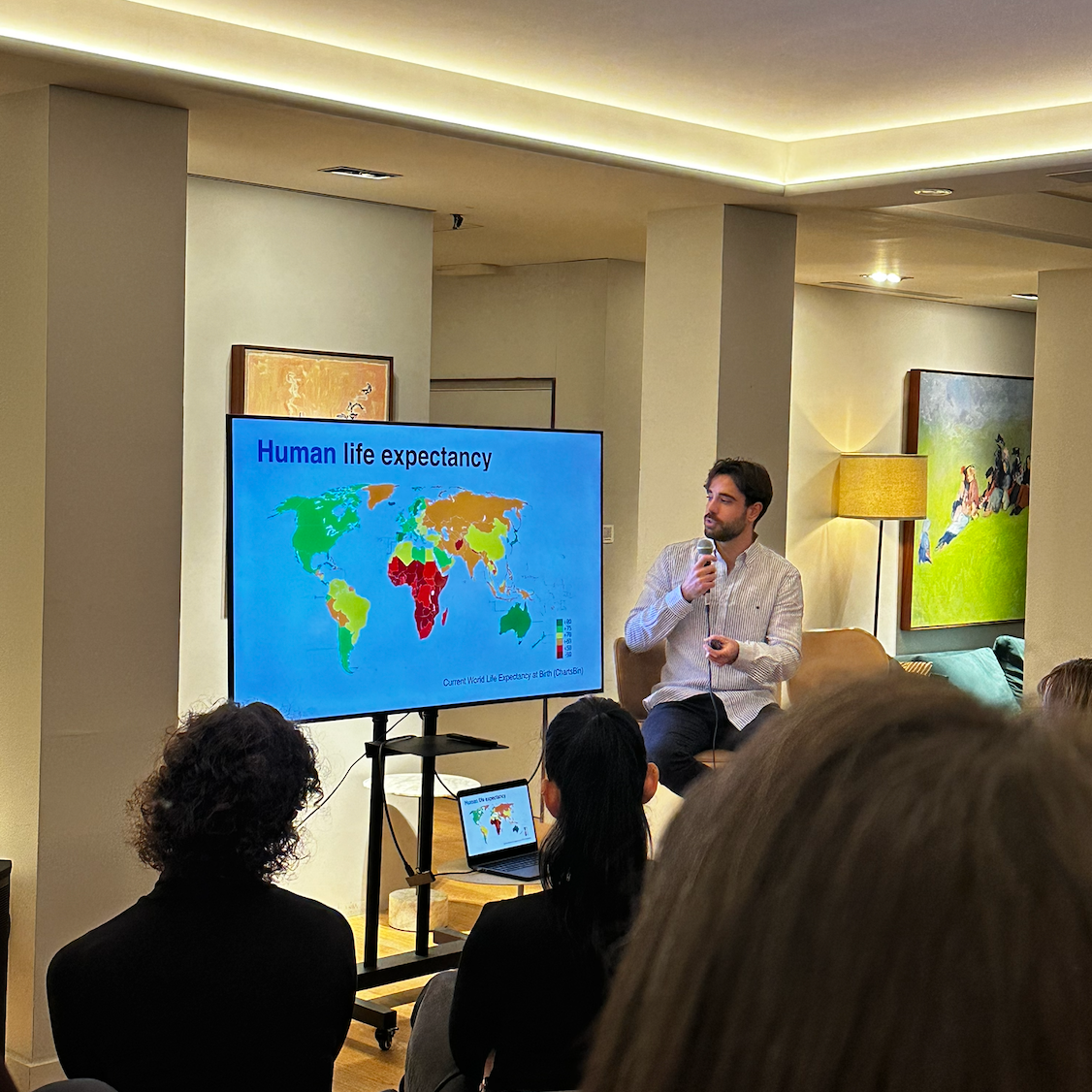
Joan Roig Soriano describes two broad ways you might translate Klotho biology into something a patient could actually receive.
The first is gene therapy, using viral particles to introduce extra copies of the Klotho gene into cells, which can increase Klotho production. It is powerful in principle, but it is also a heavier lift, partly because gene therapy tends to involve longer regulatory pathways and more complex development and manufacturing decisions.
The second is a protein-based therapy, producing Klotho as a biologic that could be administered directly, for example by injection, to increase the amount of circulating Klotho. This is the more “applicable” route in the way he talks about it, largely because it can be easier to standardise and, if it proves effective, potentially easier to scale into a mainstream treatment pathway than a gene therapy product.
Longevity science, reframed as “what aging breaks”
The wider longevity industry often sells the dream of “slowing aging” in general and in extreme cases avoiding death, but Roig Soriano is explicit about how medicine usually advances. You treat specific conditions, not abstract concepts. “You can’t develop something to stop aging.” The practical move is to focus on the disease processes associated with aging, then ask whether a therapy meaningfully changes outcomes.
In the conversation, the most tangible targets are conditions that strip people of strength and independence over time, including osteoporosis and muscle wasting. The logic is straightforward. If you can prevent or delay the slide into frailty, you have not “defeated aging,” but you have improved life in the years where it most often narrows.
A calmer view of the supplement boom
When asked about the current boom in longevity products, Roig Soriano does not default to cynicism, but he does explain why bold claims can sometimes gain traction. Human lifespan studies are unavoidably slow by definition. Even when something improves a marker or parameter, that is not the same as proving meaningful longevity effects in people. Consumers have the added risk of not truly knowing what they are buying when products are sourced online without robust controls.
This is where his most important point lands, precisely because it is so basic. “The one that improves your quality of life the most is doing regular exercise and having a healthy diet, you know.” Stripped of the hype, the message is almost stubbornly consistent. The most evidence-backed longevity play is still painfully simple.
Healthspan is the actual prize
The conversation eventually circles back to lifespan ceilings and whether humans can push beyond today’s extremes.What matters for most people is not the rare outlier who reaches an extraordinary age, but the broader goal of reaching later life healthier and more functional, with fewer years lost to weakness, fractures, or dependence on others.
That shift is the quiet core of this discussion. Klotho research is compelling not because it sells a fantasy of living forever, but because it asks a more grounded question. Can we build therapies that keep more people strong, mobile, and independent for longer, and can we do it in a form that regulators, clinicians, and health systems can realistically adopt.
To watch the full Q&A head over to our Youtube channel on the link below!