


Your Brain Is Keeping Score — AND IT’S BEEN COUNTING EVERYTHING
Neuroscientist Eloy Santos Pujol on why sleep is sacred, why your lifestyle is writing your children's DNA, and what a 116-year-old woman can teach us about aging well
By Matt Freemantle
At 116, María Branyas Morera could still play the piano. She would read books regularly until virtually the final days of her life. She was, by every measure science has, an anomaly — not just in how long she lived, but in how fully she lived. When neuroscientist Eloy Santos Pujol of the Barcelona Brain Research Center first ran her data through an epigenetic clock, the result came back stating that it expected her age to be 95.
That number — and the subsequent realisation that it wasn't an error with the machine — is what makes Pujol's work so quietly interesting. Epigenetic clocks are among the most sophisticated tools in modern aging science in that they read the chemical marks on your DNA and estimate your biological age. Maria’s extraordinary marks suggested a body operating at nearly double her chronological years. The implication wasn't depressing, it was startling; biology was working harder than anyone expected to keep her going, and it was succeeding.
her Secret Wasn't a Supplement Stack
Before anyone reaches for their NMN or their resveratrol, it's worth pausing on what Pujol's study of Branyas actually revealed. Her longevity wasn't the product of a regimen. It was the product of a life. She was surrounded by family, embedded in a rich social world, mentally active, emotionally engaged. "She was always surrounded by family, friends," Pujol notes. "She had a very enriched social cycle."
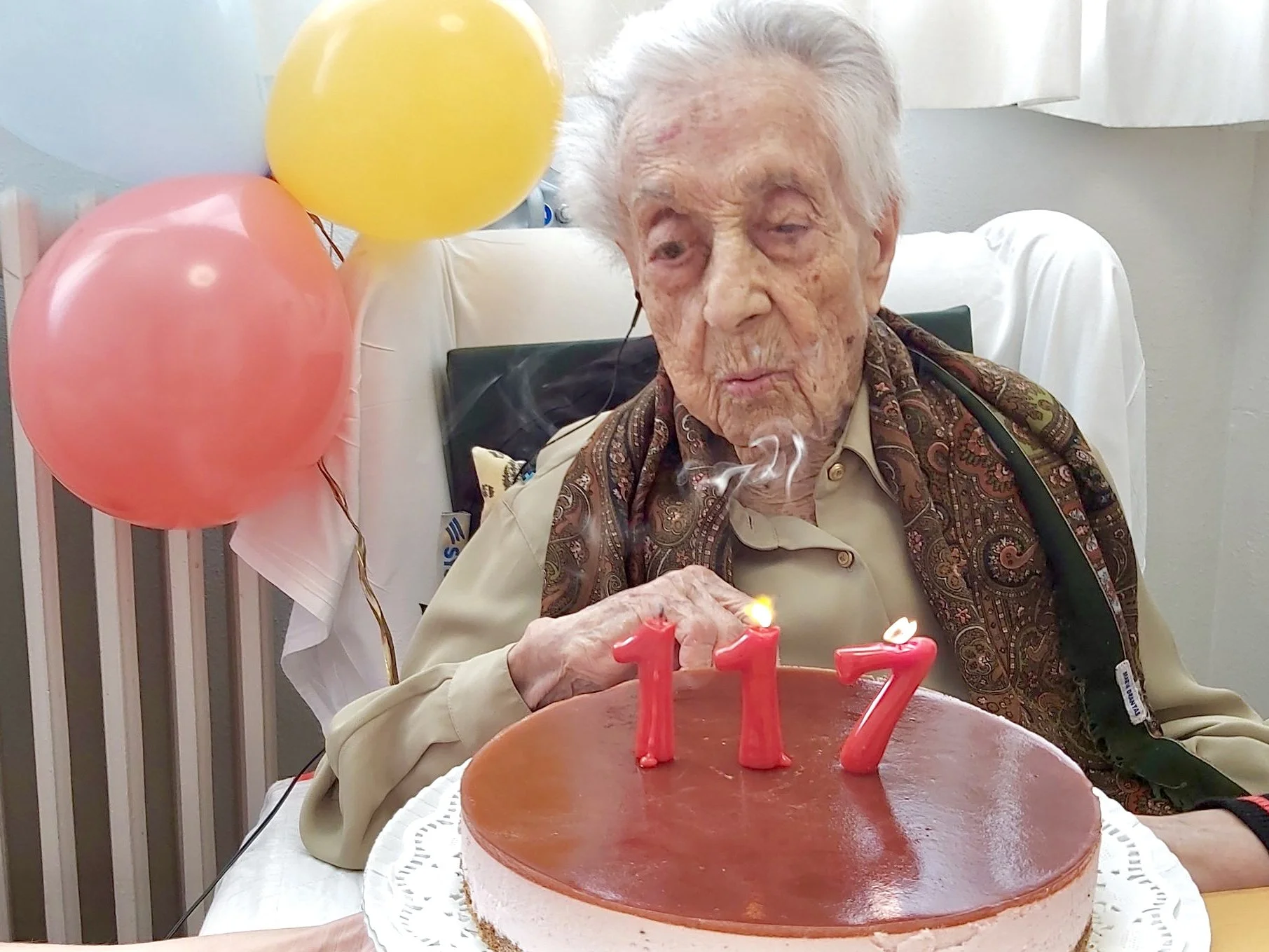
María Branyas Morera on her 117th birthday. Photo credit Arxiu de la família Branyas Morera
This is the part the wellness industry itself struggles to monetise for obvious reasons. You cannot build a social circle by taking a pill.
However, that in itself presents problems as you begin to soar in years.
At 116, she had watched her son die and had ultimately outlasted nearly everyone she had ever loved. It is, as Pujol puts it with candour, not very pleasant. "When you are getting to the age of 116 while the rest of the people are dying at 85, 90, 95 — yeah, I suppose it's hard."
Alzheimer's Is Solvable. That's a Mission Statement, not blind optimism.
Since the study, Pujol has been directing his focus towards Alzheimer's disease, and he speaks about its eventual cure not as a distant hope but as an operational objective. The Barcelona Brain Research Center exists, in his words, precisely because they believe it is possible.
The science has a logic to it. Alzheimer's, at its core, is a disease of damaged proteins that accumulate in the brain and disrupt its architecture over time. Unlike cardiovascular disease or cancer, where major treatment advances have been achieved in recent decades, Alzheimer's has remained stubbornly resistant. Pujol's view is that this lag is a challenge to be closed, not evidence of the disease's invincibility.
What he is equally insistent on, though, is the role of prevention — not as a consolation prize while research catches up, but as a genuinely undervalued lever. "Alzheimer's can be prevented because of our way of living." It is a statement that doesn't get nearly enough airtime in conversations about a disease that tends to feel like something that simply happens to people.
The Most Dangerous Thing You're Probably Doing
When asked to name the single most harmful factor in brain aging, Pujol doesn't say alcohol explicitly, though he addresses that too.
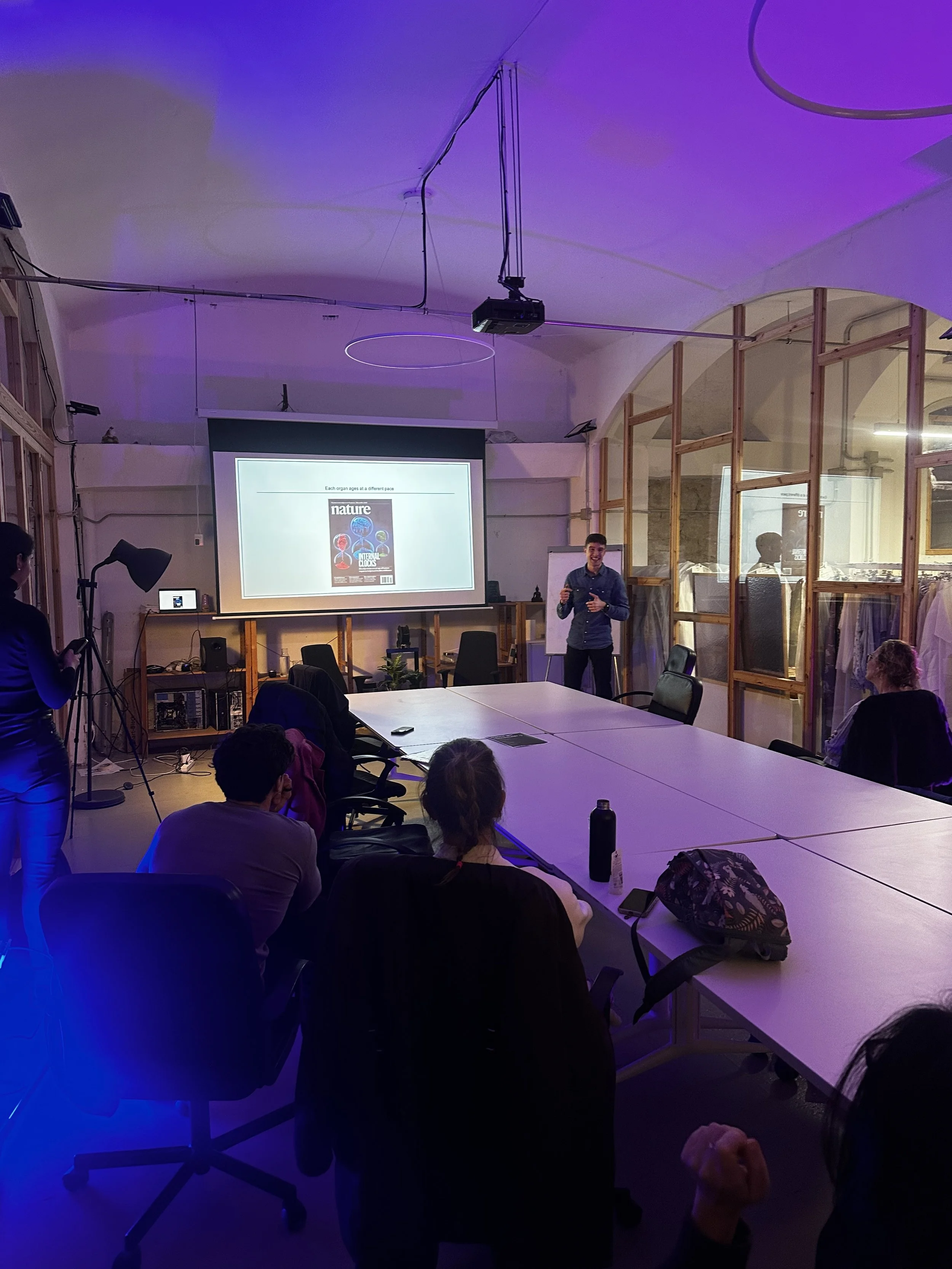
Eloy Santos Pujol speaking during a Growth Lab LIVE talk in Barcelona in 2026.
"It drives social situations but also toxic for your brain"
He doesn't say stress, though that matters. He pointedly says sleep.
"Sleep is the main key secret for a healthy brain aging. I think it is underestimated in society."
Sleep is when the brain clears itself. it is when the lymphatic system flushes out metabolic waste, including the kinds of proteins associated with Alzheimer's. Skimping on it in the name of productivity is, neurologically speaking, one of the more costly trades a person can make. The modern tendency in hustle culture to wear sleeplessness as a badge of commitment is closer to self-sabotage than progress.
Alongside sleep, Pujol flags sedentarism — the accumulated cost of sustained physical inactivity — and social isolation as compounding threats to brain health. This pattern across longevity science is consistent to the point of becoming almost even more boringly obvious.
Move. Connect. Sleep.
The evidence just keeps coming back to the most straightforward factors.
Your Habits Are Writing a Letter to Your Grandchildren
Genes, Pujol explains, are fixed. You cannot renegotiate your inheritance. But epigenetics, the chemical marks that sit on top of the DNA and control how genes are expressed, present a different story entirely. Believe it or not, studies show that these marks can be modifiable. They respond to your environment, your habits, your choices and, crucially, they can be inherited between generations.
This is where the stakes expand beyond the individual. Let’s say for example that a person smokes cannabis heavily in adolescence, the epigenetic marks that creates on sperm DNA can be passed to their children — potentially increasing their predisposition to mental health conditions like schizophrenia and addiction. Pujol is not making a moral argument here but a biological one. What we do to our bodies can leave marks that outlast us.
"The way we are living can also impact on the chemical marks on the DNA of our children."
The flip side is equally consequential. If harmful habits can write damaging marks then positive ones can write protective ones too. Epigenetics is, in Pujol's framing, the field where agency re-enters the conversation.
The good news here? There are already drugs on the market capable of modifying the epigenome — a direction of travel that, as research matures, may open up interventions we can barely imagine now.
The Question Worth Asking
Towards the end of the conversation, Pujol offers a thought that is deceptively simple and lingers longer than most technical findings do: "Why do we want to live until that long if we are not happy or comfortable with our lives?"
It is not a rhetorical deflection. It is the actual point. The longevity conversation often gets seduced by the headline number as if it were some kind of numerical competition. Could we reach 100, 110, 120 years? When the more useful measure is something a little harder to quantify; the quality of the years, the continuity of the self, the ability to remain present and active in your own story.
Living to the age of 90 years old in full health, still curious, still connected, still able to remember your daughter's name — that, as Pujol sees it, is the actual prize.
The science is pointing towards ways of getting there. The habits that help get you there, it turns out, are available right now.
Watch the full conversation with Eloy Santos Pujol on the Growth Lab Live YouTube channel: youtu.be/unbiDD0VPcs